ShapeScript
Examples
ShapeScript includes a number of example files that demonstrate various features. You can find these under the Help > Examples menu.
Ball
The Ball example demonstrates how to use the stencil command to “paint” patterns on a sphere, as well as a for loop to generate a star shape that is then extruded.

Chessboard
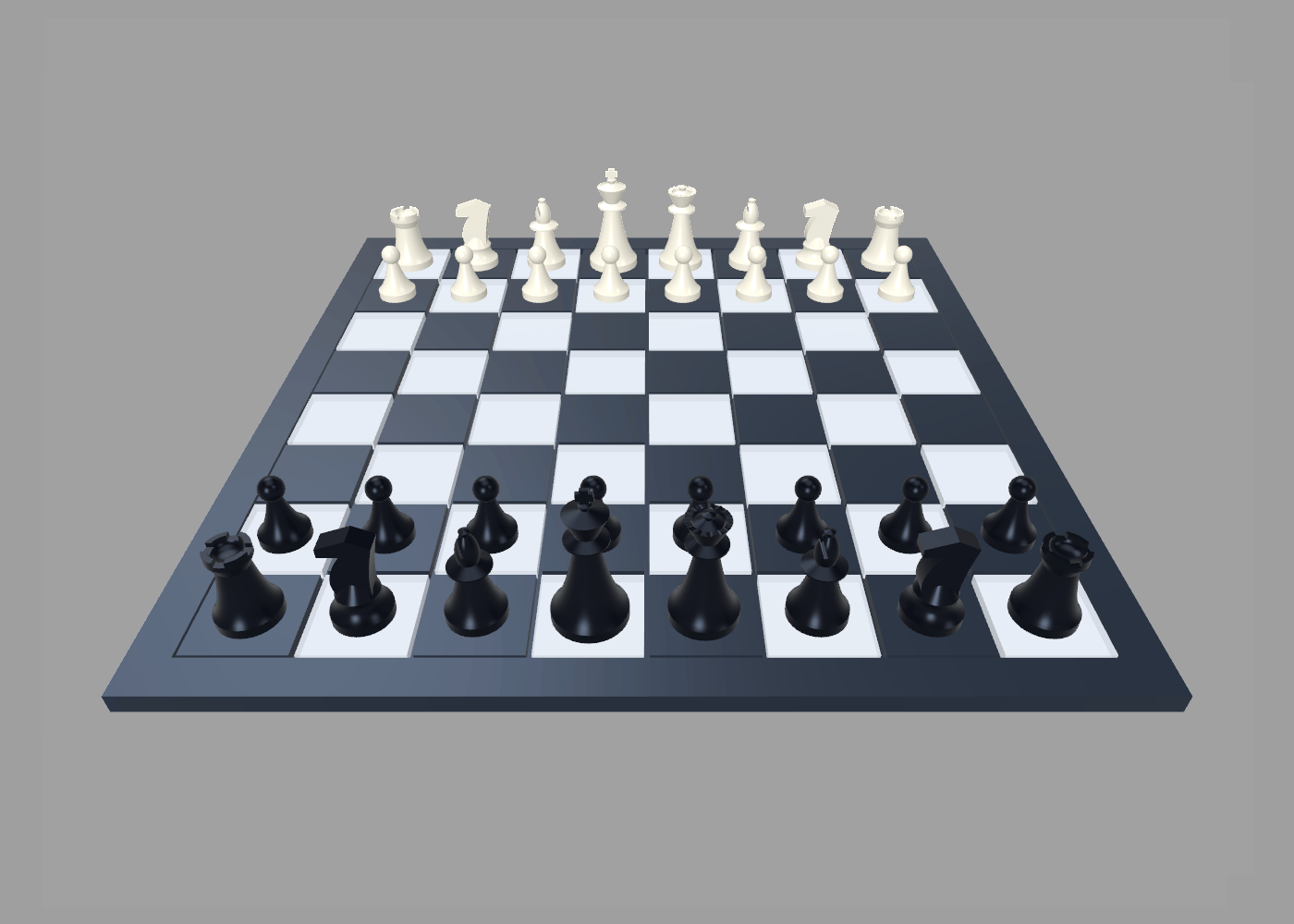
The Chessboard example demonstrates the use of for loops to duplicate shapes, along with paths, lathe builders and CSG operations.
Cog
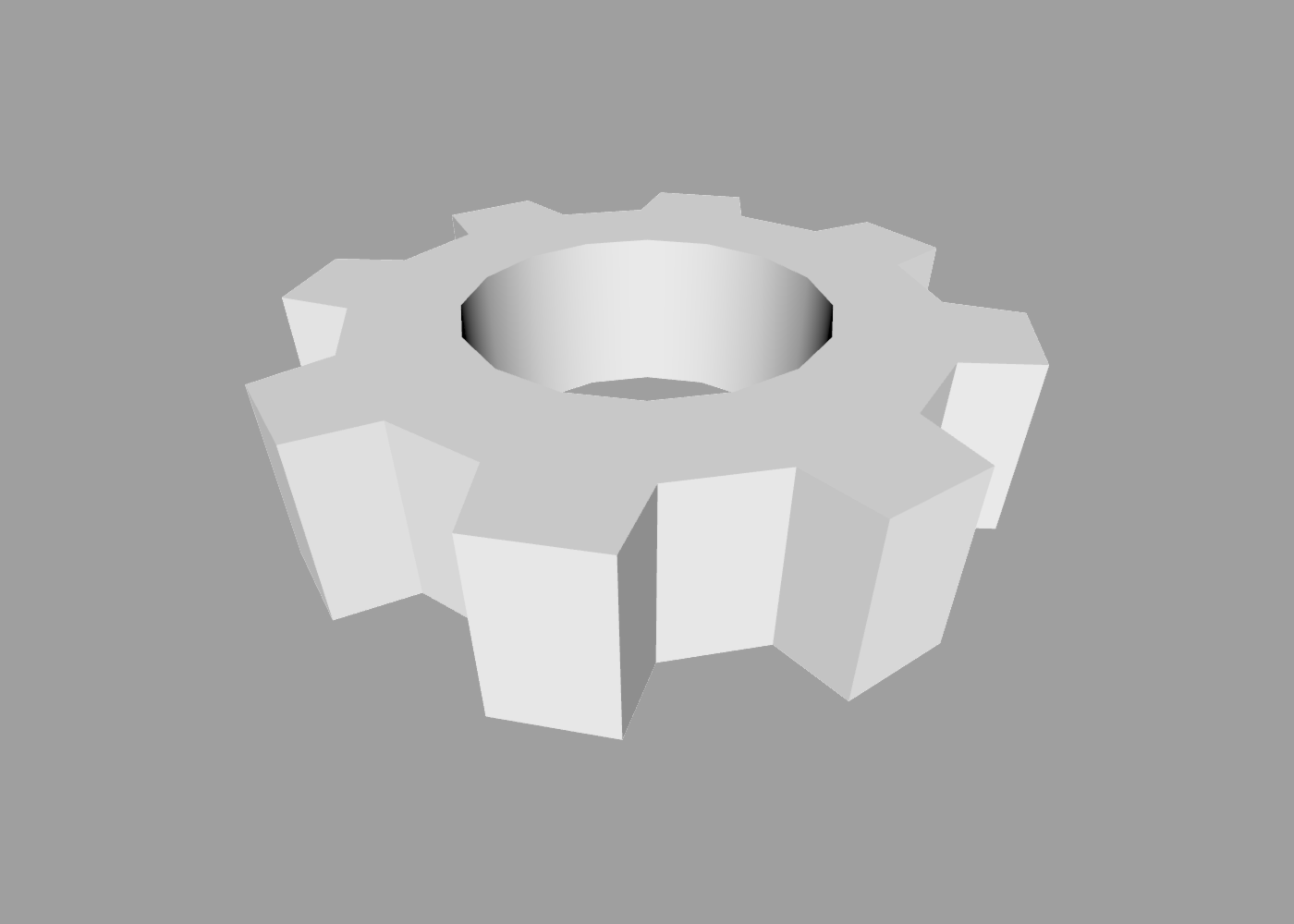
The Cog example demonstrates procedural generation of a complex path using a for loop, as well as the creation of a custom block and the use of the option command to pass parameters.
Dodecahedron
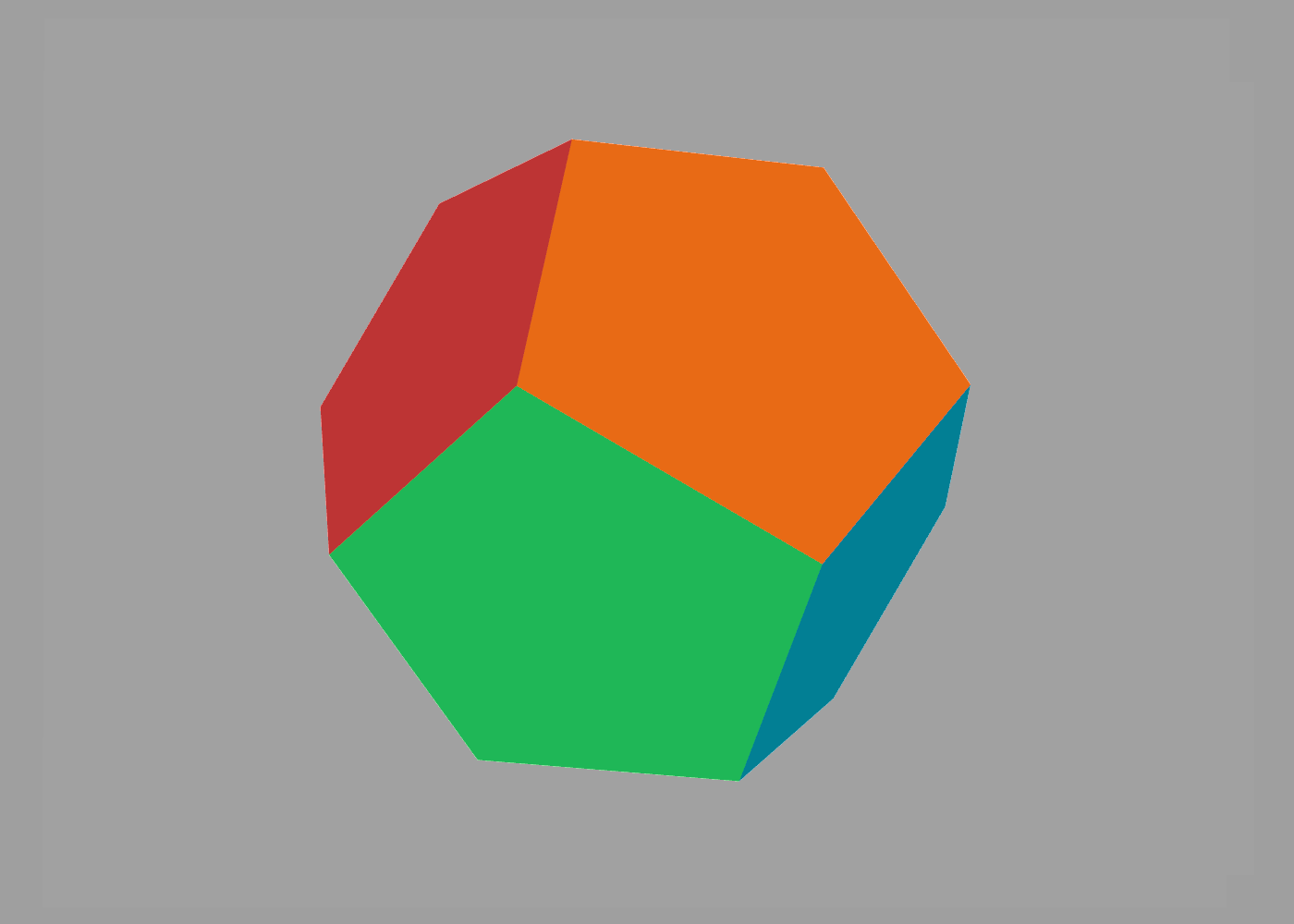
The Dodecahedron example demonstrates how to build a complex mesh from structured data and in-script calculations. It starts with a low-detail icosphere, calculates the dodecahedron vertex positions from its polygon centers, then uses face-index and color data to build the final pentagonal polygons.
Fillet
The Fillet example demonstrates how to define a reusable geometry function that combines the inset function with Minkowski addition to produce rounded mesh edges while preserving the original overall dimensions.
Earth
The Earth example demonstrates use of the texture command to turn a simple sphere into a model of the globe, along with the background command to add a star field behind it.

Platonic Solids
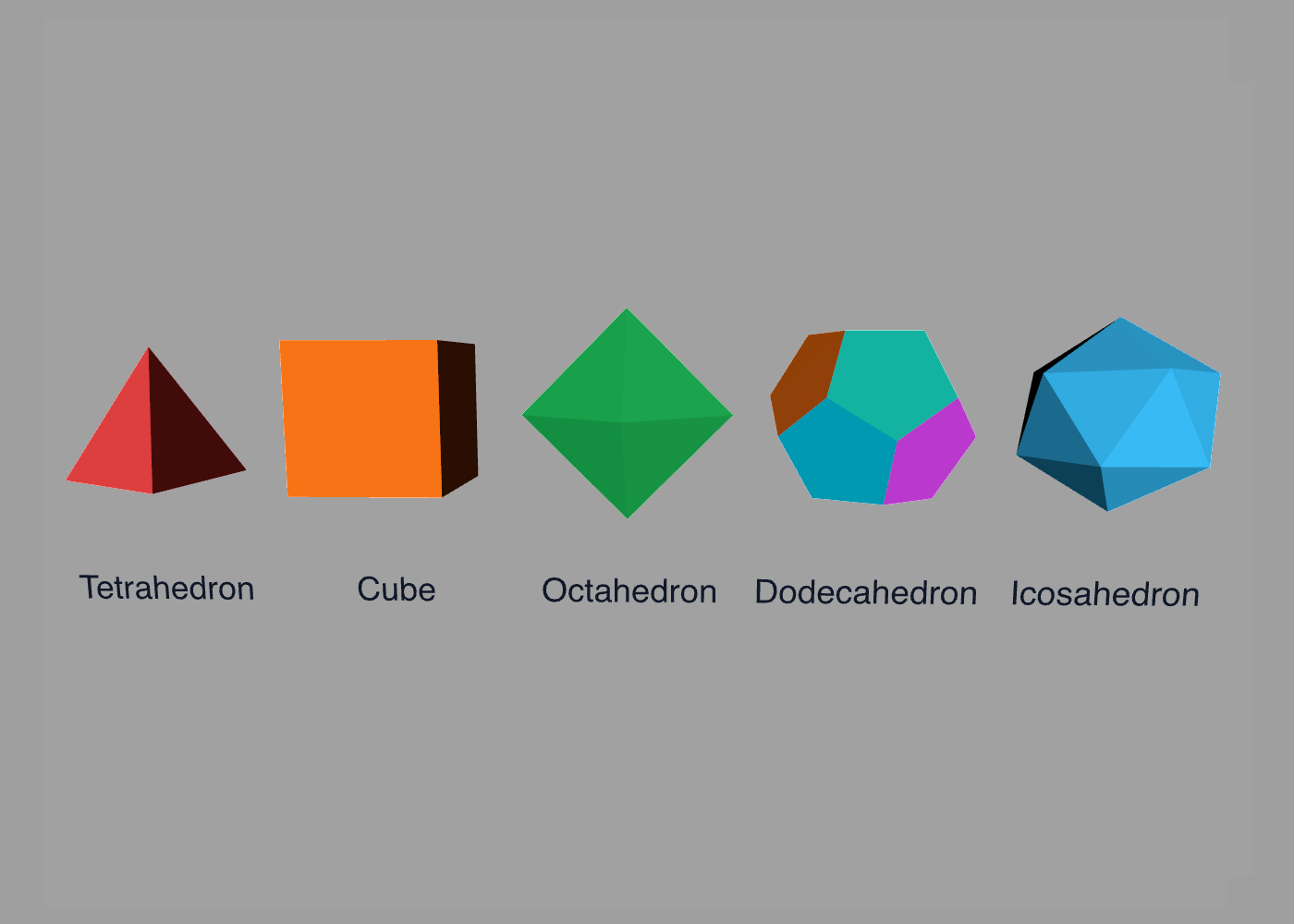
The Platonic Solids example demonstrates how low-detail cone, cube, sphere and icosphere primitives can be used to create several regular solids without manually defining mesh polygons. It also demonstrates using the import command to reuse the Dodecahedron example as one of the solids.
Spirals
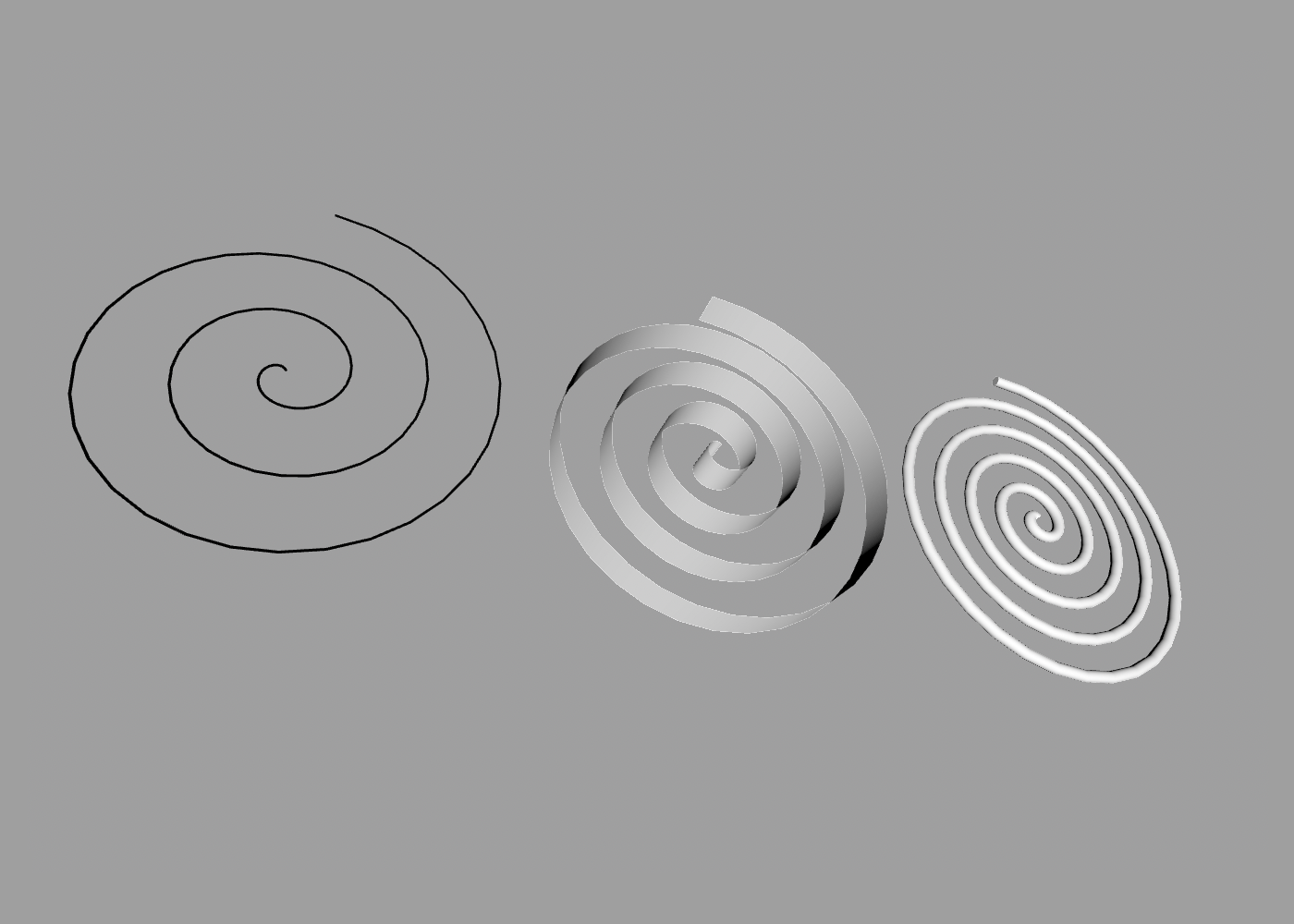
The Spirals example demonstrates using the extrude command to create a spiral. This example also demonstrates the use of for loops and user-defined options.
Spring
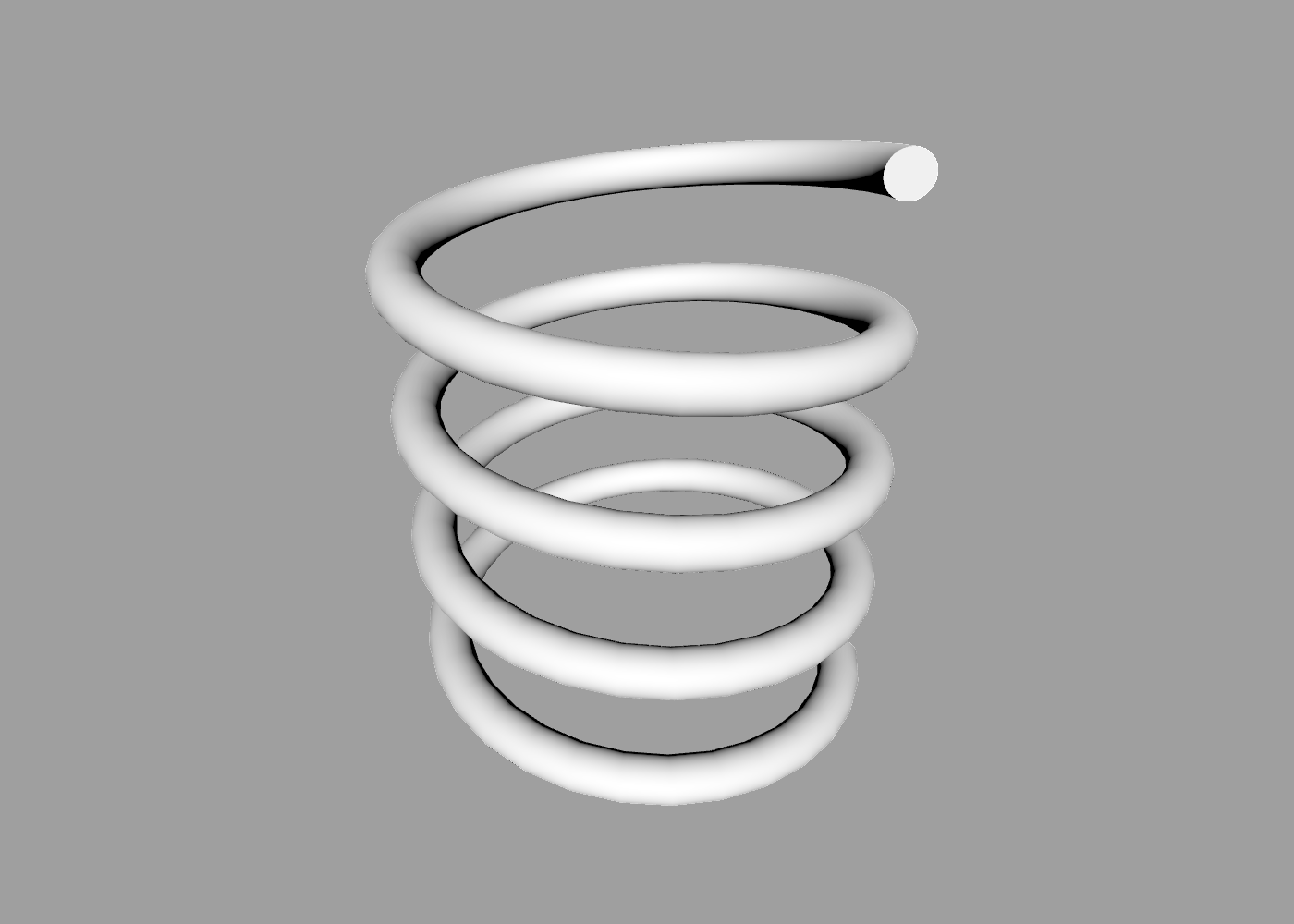
The Spring example demonstrates how to use the loft command and a for loop to create a coiled spring shape.
Train
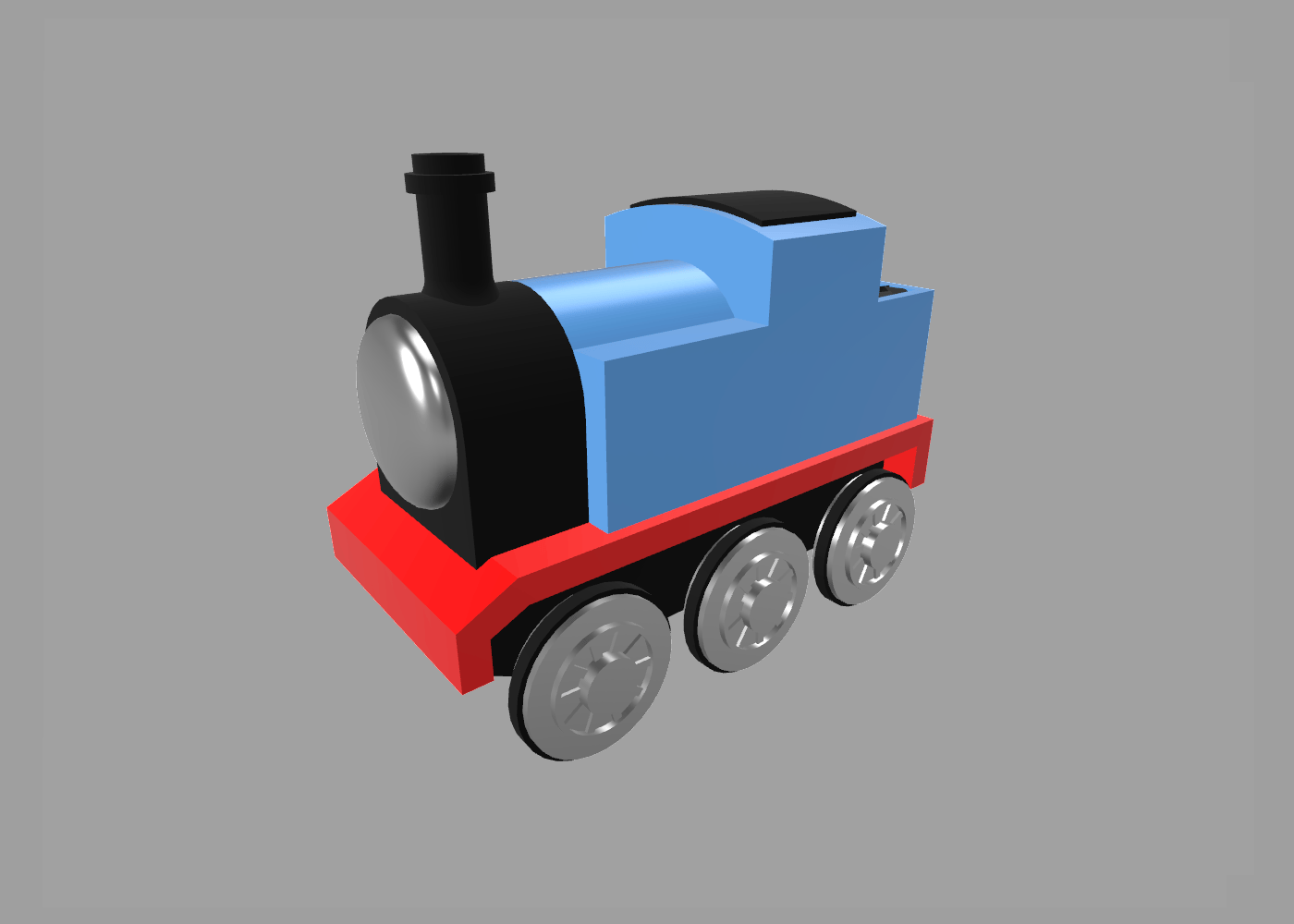
The Train demonstrates a combination of modeling techniques, including using the rnd command to generate pseudo-random coal.